



Electricity in the Oilfield: Making the Basics Practical
Whether you’re powering chemical injection pumps, RTUs, actuated valves, or solar-powered monitoring equipment, the same four electrical concepts are used everywhere: voltage, current, resistance, and power.
Voltage
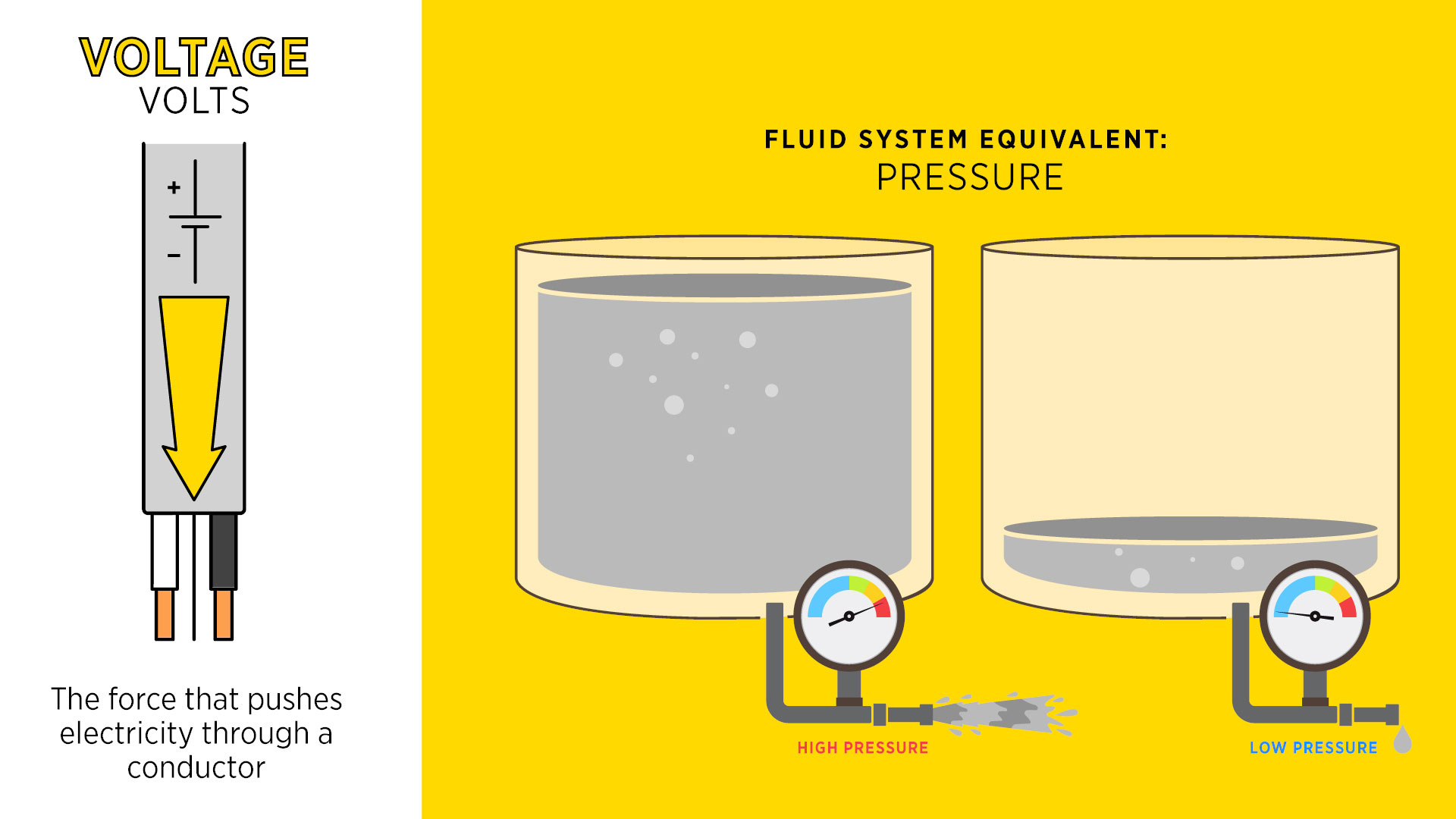
Voltage is the force that pushes electricity through a conductor. A good comparison is pressure in a pipe — higher pressure pushes fluid harder and farther.
In the oilfield, voltage determines:
- What type of power source you need (12 VDC, 24 VDC, 120 VAC, etc.)
- How far you can run power without excessive losses
- What equipment can safely operate on that circuit
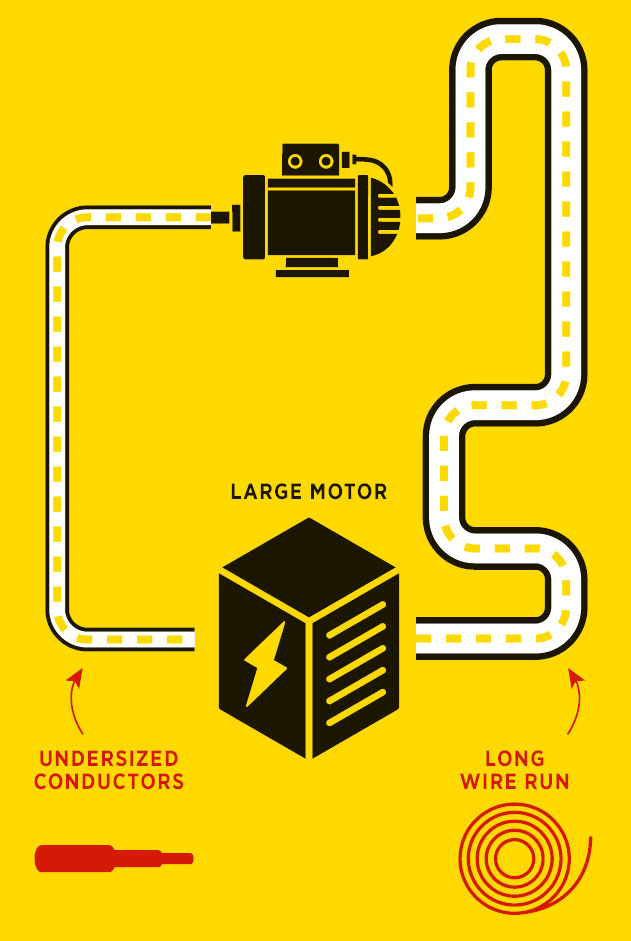
For example, a solar-powered chemical pump controller may run on 12 or 24 VDC, but a large motor may require 480 VAC.
If voltage is too low at the device, often due to long wire runs or undersized conductors, equipment may behave erratically, reboot repeatedly, or fail to operate at all. If voltage is too high, you risk damaging electronics or creating unsafe conditions.
Low voltage DC systems are much more sensitive to wire size than higher voltage AC systems.
Current
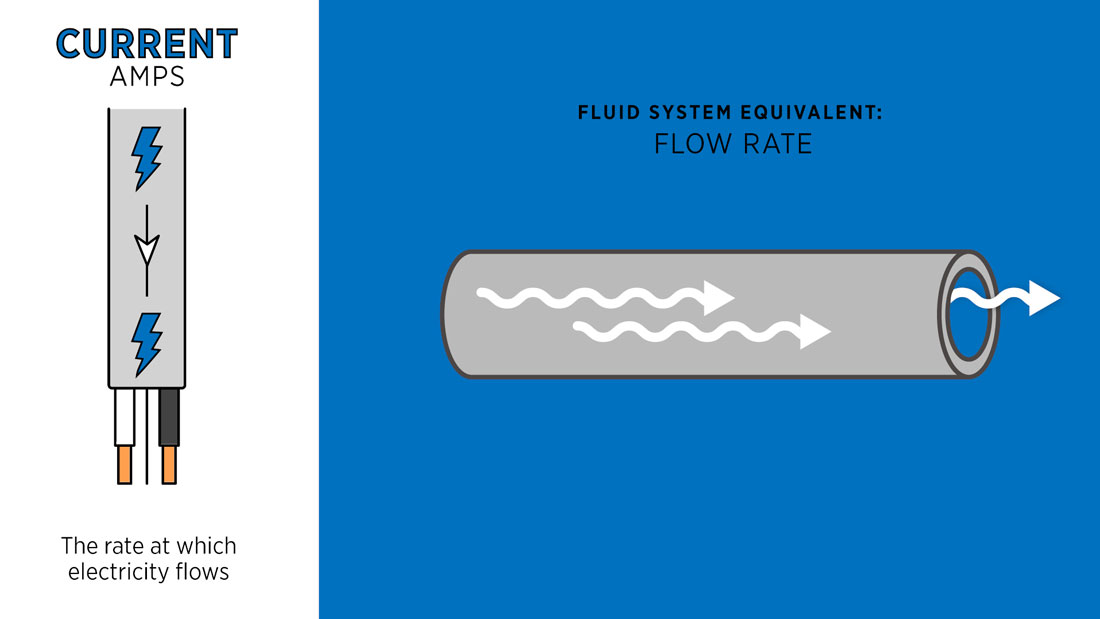
Current, measured in amps, is the rate at which electricity flows. If voltage is thought of as “pressure”, current would be the amount of fluid flowing through the pipe.
In oil and gas production, current draw affects:
- Wire size selection
- Fuse and breaker sizing
- Battery life in solar systems
- Heat buildup in enclosures and conductors
Every device draws a certain amount of current to do its job. As more sensors, actuators, and controllers are added to a location, total current demand increases. Current is often what limits how much equipment you can safely power on a given system.
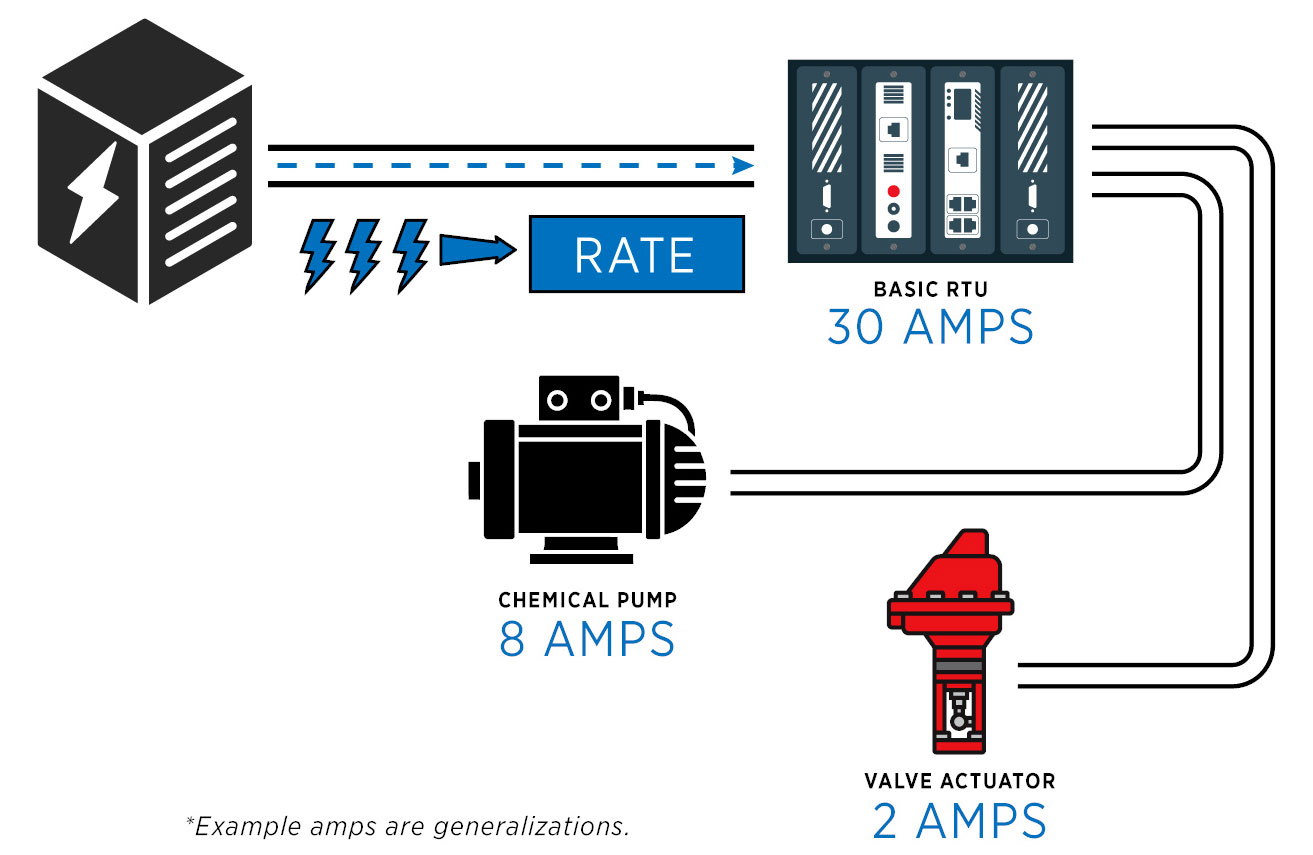
For example, a single RTU may draw very little current. When a valve actuator and chemical pump are added, the current demand climbs quickly. If wiring is undersized, excessive current causes overheating and voltage drop.
Resistance
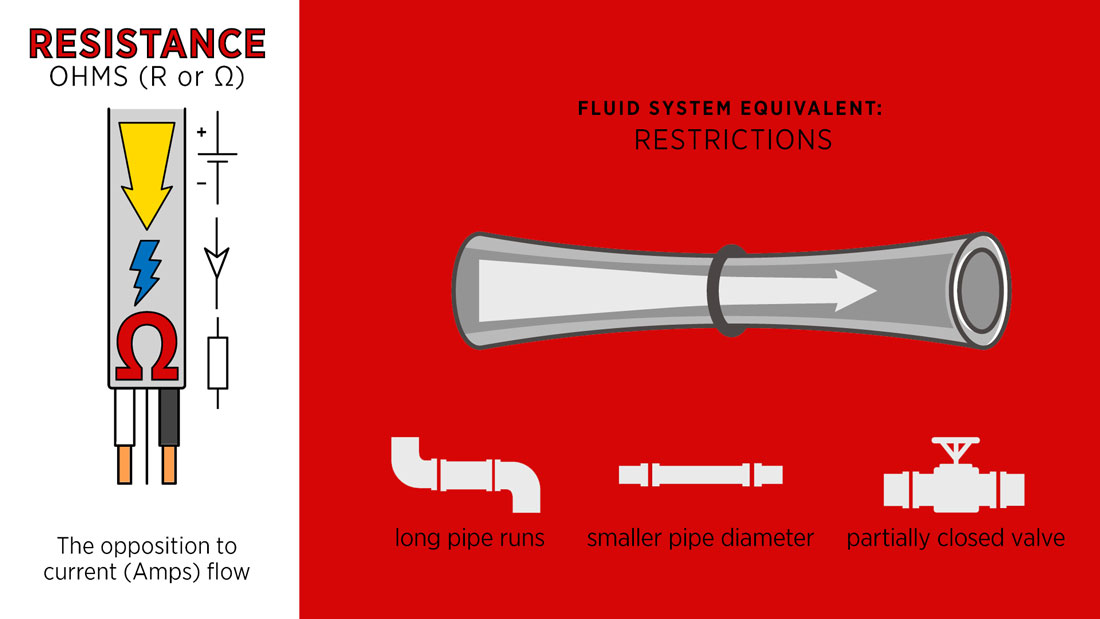
Resistance is the opposition to current flow. Every electronic device has resistance, even when installed correctly, and is one of the most common causes of field electrical problems.
If voltage is pressure and current is flow, then resistance is anything that restricts the flow in the pipe. In a fluid system this would be a smaller pipe diameter, long pipe run, or partially closed valve. In the electrical system equivalent, resistance can come from, wire length, wire size, loose connections, and internal resistance inside devices.
Temperature plays a role too. Cold weather is hard on batteries and increases internal resistance, meaning the battery voltage will drop quicker.
Too much resistance leads to:
- Voltage drops, meaning there is less usable voltage at the device
- Heat buildup
- Intermittent or unreliable operation
For example, a solar-powered site may show proper battery voltage at the panel, but the RTU still alarms low voltage. The issue often isn’t the battery but more likely the resistance in the wiring or connections between the battery and the load.
Power
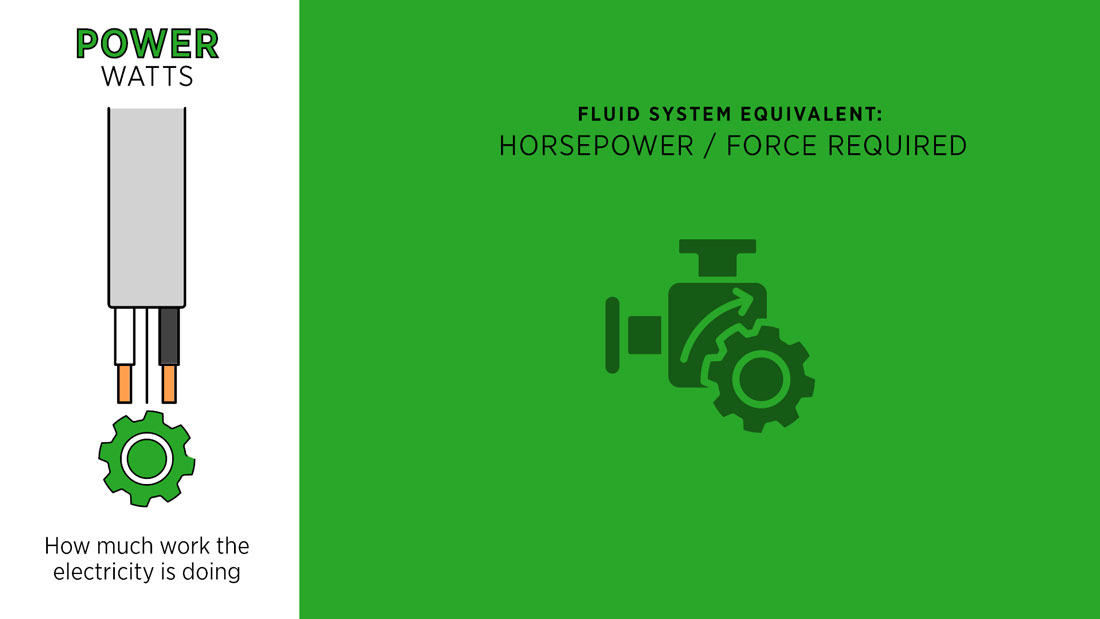
Power is measured in watts and represents how much work electricity is doing. In fluid terms, power would be similar to the amount of hydraulic horsepower or the force required to move a piston.
Watts are calculated as voltage × current. If you have high voltage but low current, you have low power, or low watts.
In production operations, power matters because it determines battery and solar panel sizing and can determine whether a system can handle startup surges or peak loads.
For example:
- A low-voltage system may require higher current to deliver the same power
- Higher current means larger wires and bigger fuses
- Motors and pumps often draw much more power at startup than during normal operation
Understanding power helps explain why a system may struggle in real field conditions. Power tells you how hard your electrical system is working, not just whether it’s on or off.
Ohm’s Law
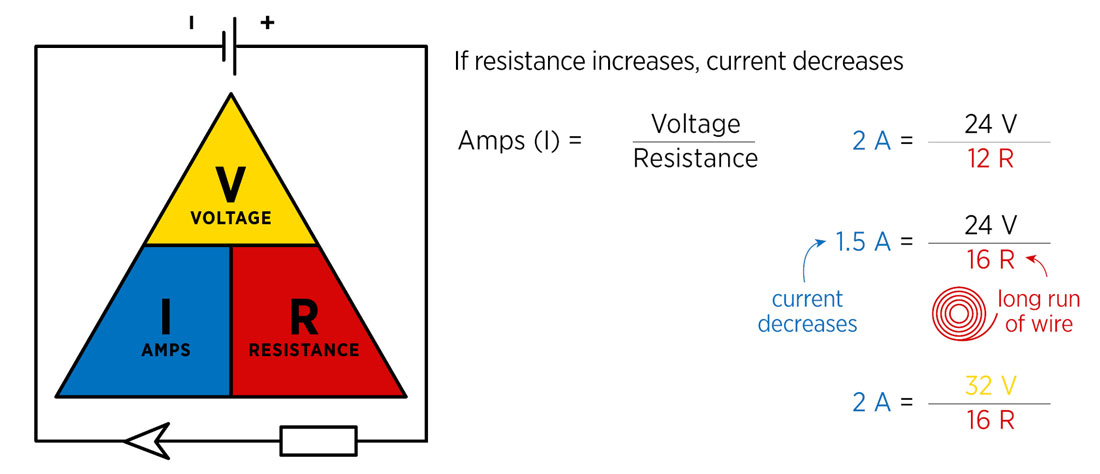
These four concepts are tied together by Ohm’s Law, which describes how voltage, current, and resistance interact.
- If resistance increases (for example a long run of wire), current decreases unless voltage increases
- If voltage drops, devices may try to pull more current to maintain power
- Increased current leads to more heat and further voltage drop
This is why small issues such as a loose terminal or undersized wire can become major operational problems. Understanding these relationships allows operators, technicians, and engineers to diagnose problems faster and reduce downtime.
When you understand all these principles and terms together, electrical systems look less intimidating and instead become tools you can reason through and troubleshoot.
More Resources
